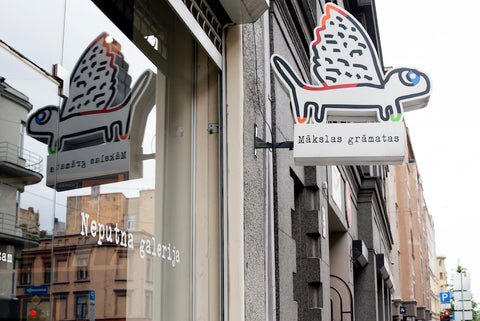
Working hours in summer
1) In July and August on Fridays Neputns Gallery will be open from 11.00 a.m. till 3.00 p.m.
3) From 19th July till 1st August Neputns Gallery will be closed, the orders will not be processed during this time.
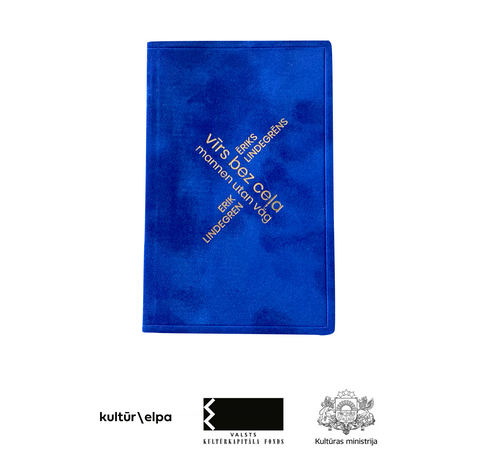
Erik Lindegren's "mannen utan väg" published in he Neputns bilingual velvet poetry series
The Swedish poet Erik Lindegren’s (1910–1968) cycle of forty “broken sonnets”, The Man Without a Way, is translated into Latvian by Zigurds Elsbergs.
The most important and unique collection of Swedish poetry of its time, The Man Without a Way was created between November 1939 and summer of 1940. Although Lindegren had already published his debut collection, it was with The Man Without a Way that he found his surrealistic way of writing. The author himself dubbed these poems "broken sonnets".
More: here
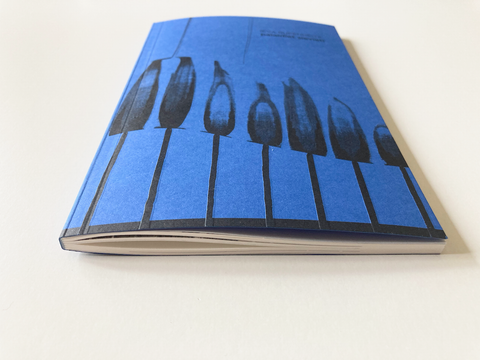
Ieva Rupenheite’s fourth collection of poems "Let the Woman"
palaidiet sievieti (Let the Woman) is Ieva Rupenheite’s fourth collection of poems.
“Time has passed since the collection nepāriet, and there is a need for a new book, in which the author’s lyrical heroine may have lost the last remnants of lyricism,” the author says, adding that “the title does not claim a socially critical message, and it has a rather distant connection with the mood of feminism. It is a line from a poem.”
"Ieva Rupenheite’s poems reveal a purposeful work with language that allows you to see the world in an unusual light. In her fourth collection of poetry, even the most mundane situation can serve as a starting point for a language experience that tends to shoot the reader’s associations in unexpected directions." (Kārlis Vērdiņš, editor)
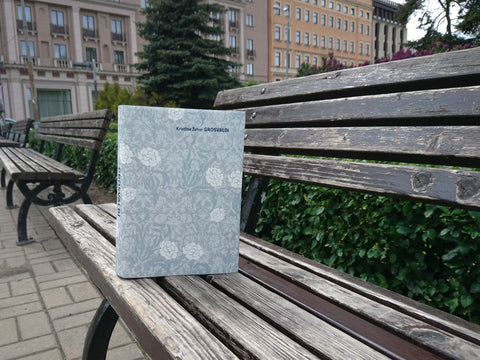
Novel about the Grosvalds family
Kristīne Želve’s novel Grosvaldi (The Grosvalds) focuses on an important family in the history of Latvia and their life for almost a hundred years.
The Grosvalds are: lawyer Frīdrihs Grosvalds, the long-term head of the Riga Latvian Society, his wife Marija Grosvalde and their five children – Mērija Grīnberga, a Latvian folk costume populariser and ethnographer, diplomat Oļģerds Grosvalds, painter Jāzeps Grosvalds, foreign service employees Līna Grosvalde and Margarēta Grosvalde, and the grandchildren – museum specialist Mērija Grīnberga Jr. and mathematician Emanuels Grīnbergs.
The novel intertwines different times, places and languages, historical vocabulary with contemporary language, the charming lightness of Belle Époque with the harshness of the birth and death of the Latvian state, exuberant playfulness with painful seriousness, authentic letters and diaries of the Grosvalds with the author’s imagination, creating the world of the Grosvalds family and the era they were destined to live in.
More: The Grosvalds
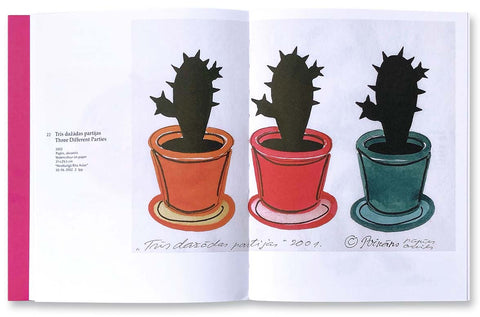
Drawings by Ivars Poikāns
The book features drawings made by Ivars Poikāns for Latvian newspapers and magazines covering po litical and social issues.
"While Poikāns’ drawings have a satirical inclination, they also slant toward political cartoon, which has always been a valuable source of information for historians. Usu ally, such studies emphasize the function of humour and taking the public’s anti heroes down a peg, but with the benefit of hindsight it also becomes clear that car toons can serve as accurate documents of historical events." (Diāna Barčevska, compiler)
More: Nothing Changes. A Chronicle of Political Life 1999–2003